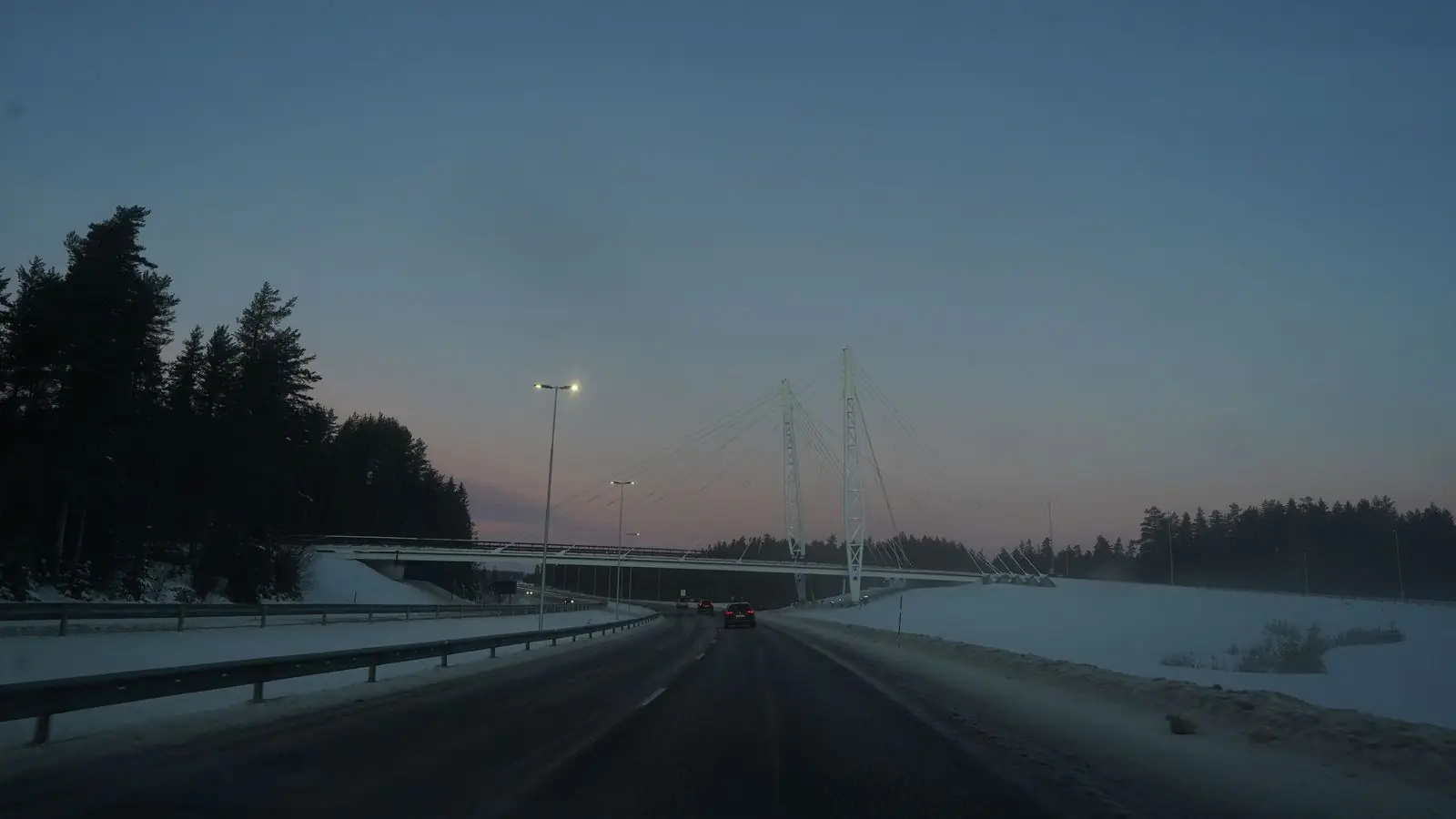











In winter, Highway 401 and 407 travel from Oshawa needs extra time: add 30–60 minutes to a Pearson run (normally 60–90 minutes, about 85 km) in snow. The 407 East from Brock Road to Highway 35/115 is toll-free, and the 407 ETR west of Brock Road is tolled. Our fixed fares include tolls, and our cars run winter tires November to April.
Highway 401 and 407 winter travel: the two roads across Durham
Would you rather leave the snow to someone else? Book a winter-ready chauffeur for the trip. Two highways carry almost every trip west from Oshawa. Highway 401 runs east–west through the south of the city, close to the Lake Ontario shore, with interchanges at Stevenson Road, Park Road, Simcoe Street, Ritson Road and Harmony Road. Highway 407 runs across the north of Durham Region. The toll-free connectors, Highway 412 in Whitby and Highway 418 in Clarington, link the two. To the east, Highway 35/115 leads to Peterborough. This guide is for anyone planning a trip on these roads between November and April.
Which parts of the 407 are toll-free?
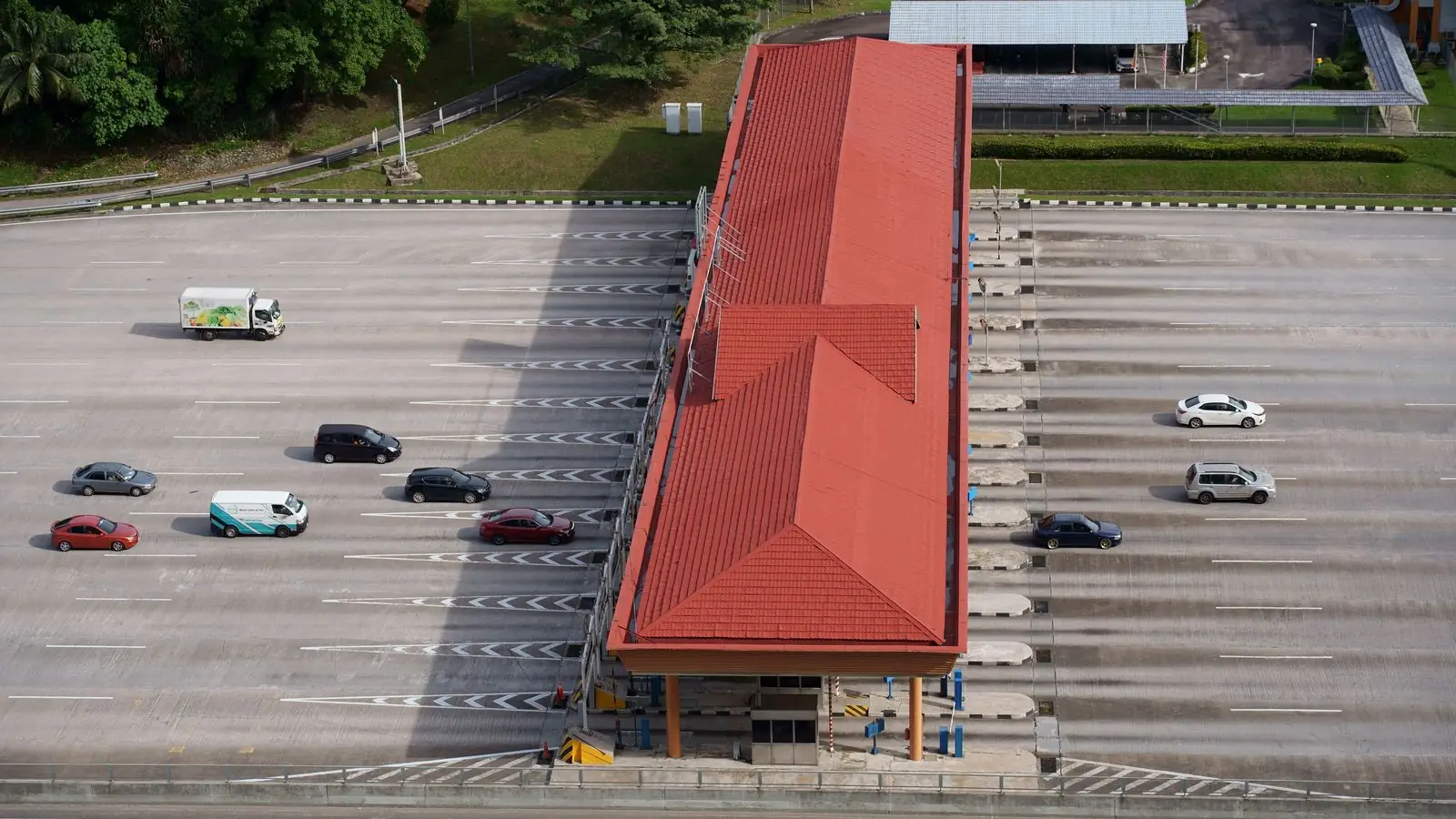
The province's cost-of-living page says tolls were permanently removed from the provincially owned Highway 407 East on June 1, 2025, and from Highways 412 and 418 in April 2022. In practice, from Oshawa that means the 407 between Brock Road in Pickering and Highway 35/115, plus both connectors, costs nothing. West of Brock Road, the highway is the privately operated 407 ETR, which still charges tolls; check current rates on the 407 ETR website. On our bookings, tolls on the planned route are already inside the fixed fare, so the chauffeur chooses the faster road on the day without changing your price.
401 or 407 in snow?
Neither is always better. A few patterns we see on Durham runs:
- The 401 carries far more traffic, so a single collision can stop it for an hour, but it is also the first road plowed and salted, and it sits on lower ground near the lake.
- The 407 usually has lighter traffic and fewer trucks, which matters when visibility drops. Through Durham it runs further inland, where snow can be heavier than at the lakeshore and blowing snow drifts across open fields.
- The 412 and 418 let a chauffeur switch from one highway to the other mid-trip when Ontario 511 shows a closure ahead.
The dispatcher checks both roads before a winter airport run and tells the chauffeur which to take.
How much extra time should I allow?
Planning figures from downtown Oshawa, one way, with the extra time we add in winter:
| Destination | Distance | Normal drive | Add in snow | Business sedan fare |
|---|---|---|---|---|
| Whitby, Courtice | 8–12 km | 10–20 min | 10–15 min | $150–175 |
| Pickering, Pickering Casino Resort | 33 km | 25–35 min | 15–30 min | $200–230 |
| Canadian Tire Motorsport Park | 45 km | 35–45 min | 15–30 min | $230–265 |
| Union Station, downtown Toronto | 60 km | 50–75 min | 30–45 min | $320–370 |
| Billy Bishop (YTZ) | 64 km | 55–80 min | 30–45 min | $350–405 |
| Peterborough | 75 km | 55–65 min | 20–40 min | $360–415 |
| Toronto Pearson (YYZ) | about 85 km | 60–90 min | 30–60 min | $360–415 |
| Hamilton airport (YHM) | 140 km | 105–135 min | 45–60 min | $560–645 |
The fares are planning ranges, all-in plus HST, and they do not change in bad weather: there is no surge on storm days. In a real storm, with a warning in force, add more, or move the trip if it can wait.
The rush-hour pattern, made worse by snow
On a clear weekday, the 401 west of Pickering is slow in the morning westbound and in the late afternoon eastbound. Snow does not change the pattern; it stretches it. A storm that starts at 3 p.m. on a Friday can turn the evening drive home from Toronto into a two-hour crawl. For flights, early mornings are often the easiest winter driving of the day, before traffic builds, provided the plows have been through overnight.
What does Ontario advise for winter driving?
The province's winter driving page sets out the basics, which are worth repeating for anyone driving themselves:
- Winter tires improve traction and can shorten braking distances by as much as 25 per cent; ask your insurer whether you qualify for a discount.
- Keep the fuel tank at least half full and carry washer fluid rated for very low temperatures.
- Carry a winter survival kit: a charged phone, water and food, a flashlight, a blanket and warm clothes, jumper cables, a shovel and traction aids.
- Clear snow and ice from the windows, lights, mirrors and roof before you leave.
- Do not use cruise control on wet, snowy or icy pavement, and leave extra space.
- Bridges, overpasses and shaded areas freeze before the rest of the road.
Snowplows: why the advice is "wait"
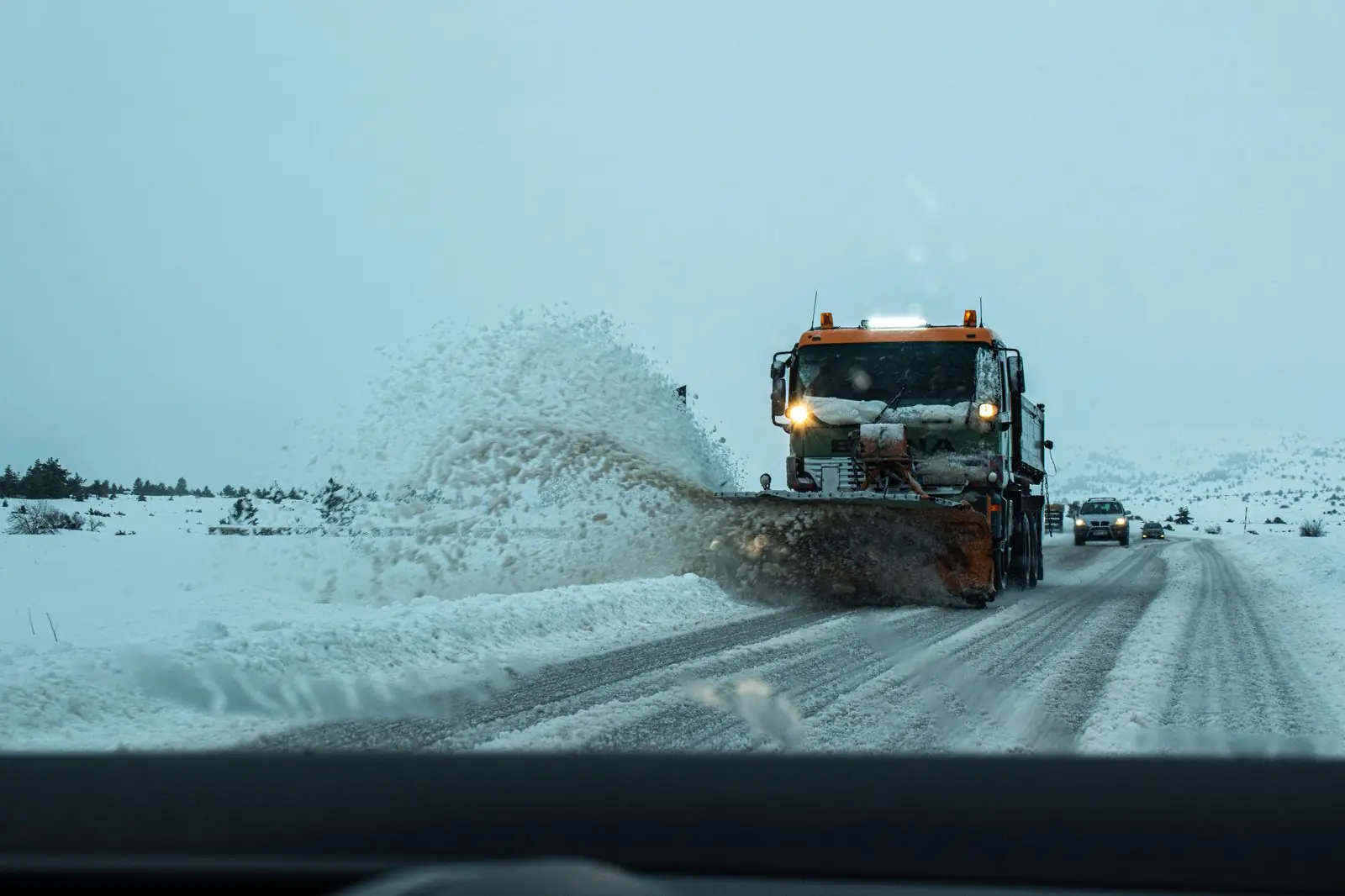
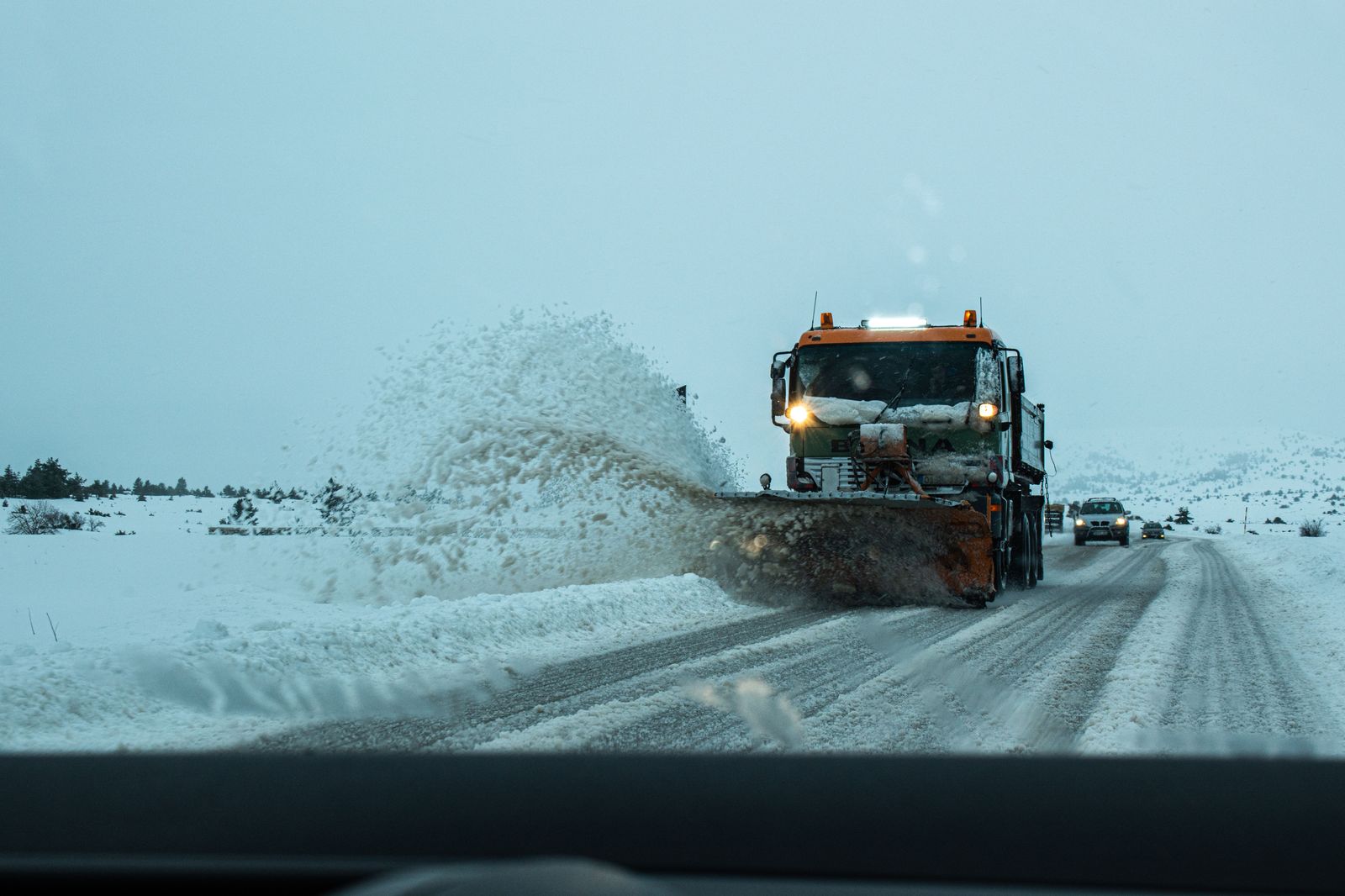
The same provincial page is clear that you should never pass a working snowplow, because blowing snow and the ridge the blade throws up can hide what is ahead. Roads are plowed in sections, so you are usually behind a plow for no more than 20–30 minutes. Our chauffeurs stay behind plows, and we build that into winter pickup times rather than asking anyone to make up time.
Checking the roads before you leave
Ontario 511 shows provincial highway cameras, closures, road conditions and plow locations. Environment Canada issues weather warnings for Durham Region and the GTA. Look at both the night before an early flight and again an hour before leaving. Our dispatchers check the same sources and will call you if they want to move a pickup earlier.
How our chauffeurs plan a winter run
On a forecast storm day, the dispatcher reviews the next morning's airport pickups the evening before and suggests earlier pickups where the margin looks thin. Vehicles run on winter tires from November to April, are cleared of snow before they leave, and carry a winter kit. If the 401 closes, the chauffeur switches to the 407 through the 412 or 418, or to local roads such as Highway 2 or Taunton Road for short distances. Flights are tracked, so if your arrival is delayed by de-icing at Pearson, the pickup moves with it at no cost inside the included waiting time.
Which vehicle is best in winter?
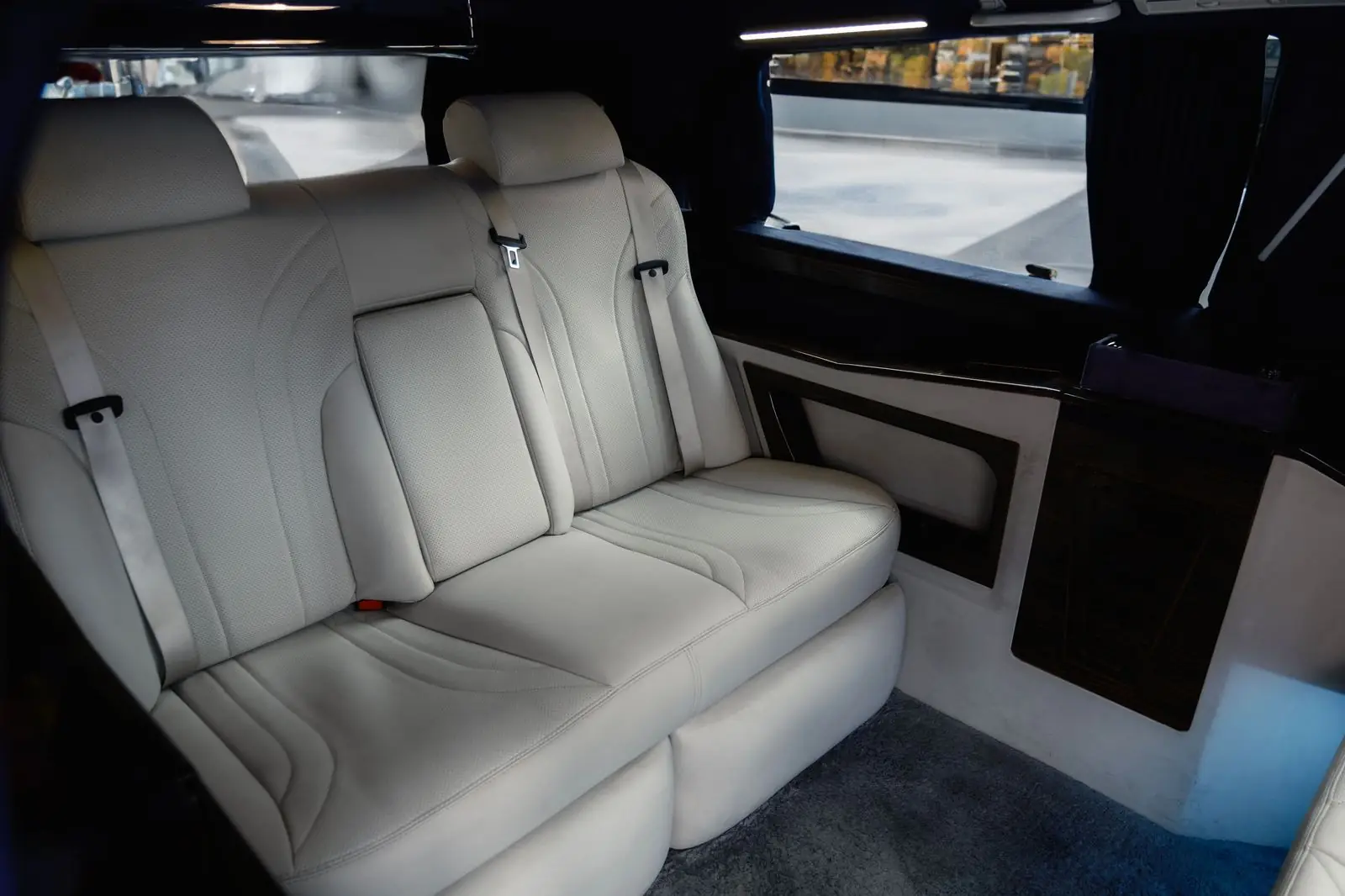
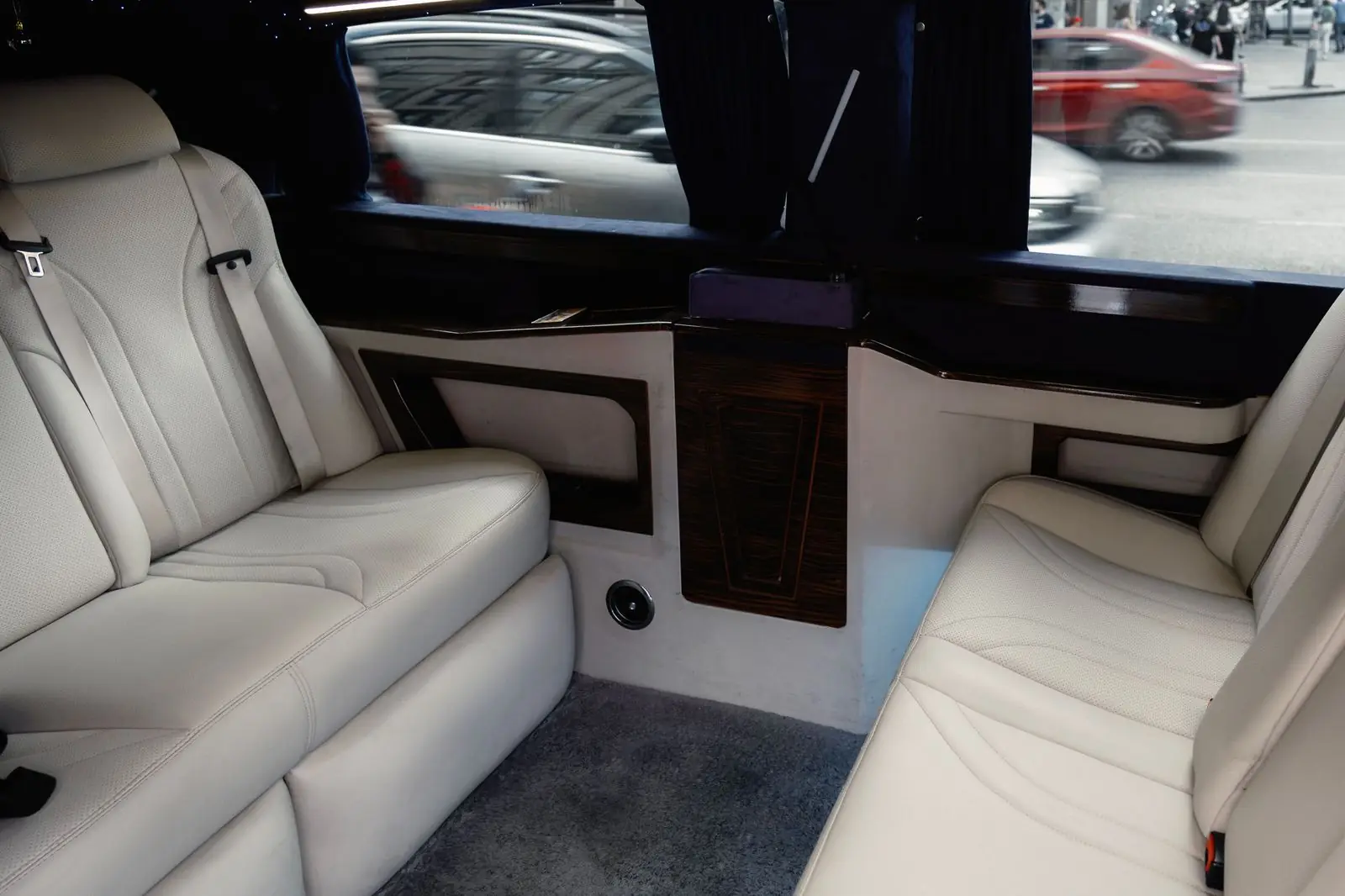
All our vehicles are winter-equipped. For deep snow, a heavy airport bag load or a long run to Peterborough or Kingston, many clients prefer a business SUV ($470–540 one way to Pearson) or an executive SUV ($600–690) for the ground clearance and the luggage space. A business sedan on winter tires handles a plowed 401 perfectly well. See the fleet page and the luxury SUV service.
Ski weekends and winter getaways
Blue Mountain and Muskoka are winter favourites from Durham. Both are two to three hours away in good conditions, and both cross open country where snow squalls come and go. The Blue Mountain round-trip package is $1,500 + HST in a business sedan and $1,910 + HST in a business SUV, with skis and boards loaded by the chauffeur. Leave earlier than you think on a Friday afternoon.
What if a storm cancels my flight or closes the highway?
If the airline cancels, call dispatch and we rebook the transfer for the new flight. Cancelling more than 72 hours before pickup costs nothing; inside that window the sitewide cancellation terms apply, and dispatch will work with you to move a weather-affected transfer to the new flight. If the highway closes after pickup, the chauffeur takes the best open route and keeps you informed; the fixed fare does not change because of a detour we choose.
Winter game nights and concerts
Leafs and Raptors season runs through the worst of the winter. A storm on a game night means slower roads both ways and crowds leaving at the same time. Booking the car by the hour keeps it near the arena rather than fighting back through traffic to collect you; our hourly vs point-to-point guide shows when that is worth it. For the Oshawa Generals at the Tribute Communities Centre, the drive is short, but a car waiting at the door is still welcome at minus 20.
Longer winter trips: Ottawa, Montreal, Kingston
East of Oshawa, the 401 runs through open farmland and past the lake, where squalls can drop visibility suddenly. On long winter runs we can schedule a second chauffeur, and overnight trips with the chauffeur staying over are arranged at booking. Kingston is about 190 km and roughly two hours in good weather; allow much more in a storm.
Planning for the airport in winter: a checklist
- Check your flight status and any airline weather advisories the evening before.
- Look at Ontario 511 and Environment Canada warnings.
- Accept the dispatcher's earlier pickup if they suggest one.
- Pack boots and a coat for the walk from the car, even if you are flying somewhere warm.
- For the return, keep your phone on after landing so the chauffeur can reach you.
Our Oshawa to Pearson transport guide compares the train and the car for days when the roads are bad, the rest of our travel guides cover prices and booking choices, and our travel desk can help rebook flights and hotels if a storm forces a change.